Ask for the kind of support you want: encouragement, help choosing a first action or a smaller version of a task. You decide whether a suggestion fits the time and circumstances you actually have.
Ask for the kind of support you want
Say what would help: "I want a short encouragement message" or "Help me find the first action for this task." Use the offered motivation starter if you prefer, then add the practical context you want to share.
You do not have to disclose private personal history to request help with a task. If you want concrete planning rather than a pep talk, say so. Check the answer against your own situation.
Make the action smaller
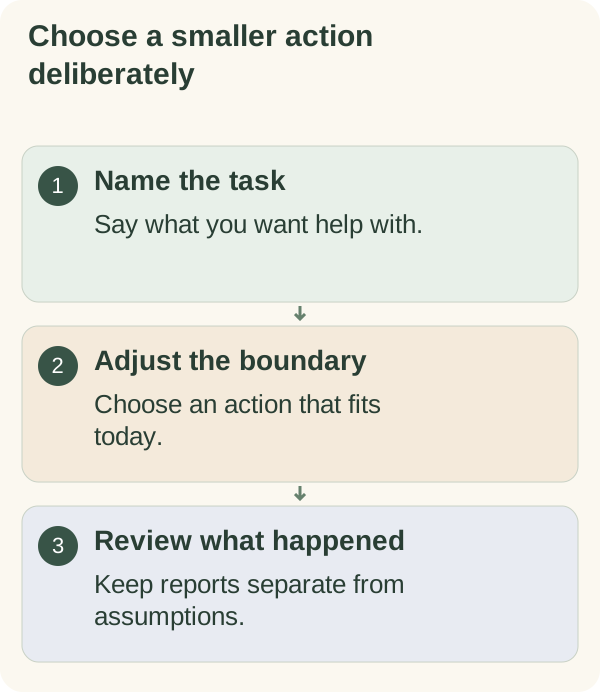
Name the task, the obstacle and the time available. "I have ten minutes and the report is unfinished" gives a different starting point from "I need to finish everything today."
Ask for an action with an observable boundary: open the draft, locate one document or write a heading. If it still does not fit, ask for another option, reduce its scope or decide to pause.
When you want a saved goal or task changed, make that request explicit and check the result in My goals or today's list. A useful sentence in chat is not evidence that a saved card changed.
Handle a missed day and continue
Distinguish what happened from what was recorded. No check-in report means the result is unknown; a known missed plan can help you decide whether to change its time, scope or priority.
Choose the next arrangement without adding catch-up work automatically. The restart collection offers specific situations, or use the weekly review to write a decision. Browser worksheets do not update bot records.
Know when to get other help
This is general encouragement and planning support. It does not diagnose a condition, provide professional treatment or promise an outcome. If there is immediate danger, seek local emergency help rather than relying on a coaching conversation. For needs beyond planning, choose appropriate professional or trusted personal support.