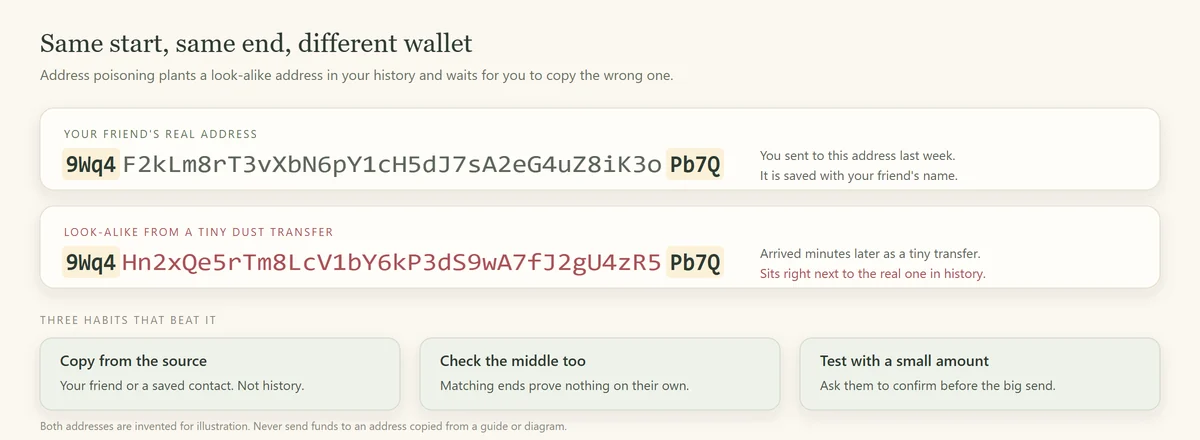
Verify a financial request separately from the conversation that brought it to you. A familiar profile, patient relationship or convincing support story can still lead to a false platform, a request for secrets or an unwanted payment. You can stop without first proving who is behind it.
Why social scams work so well
An approach can borrow credibility from a brand, a friend, a recruiter or an apparent authority. Some apply immediate pressure; others build contact over time. A calm conversation is not proof of legitimacy, and being deceived is not evidence of carelessness.
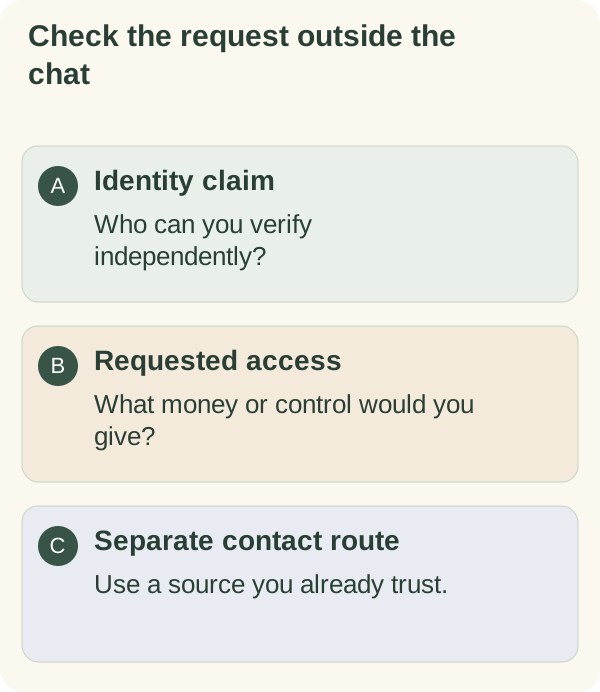
Keep the important decision separate: who is asking, what can be verified independently and what access or payment they want. Do not use only the phone number, account or link supplied by the person making the request.
Fake support agents
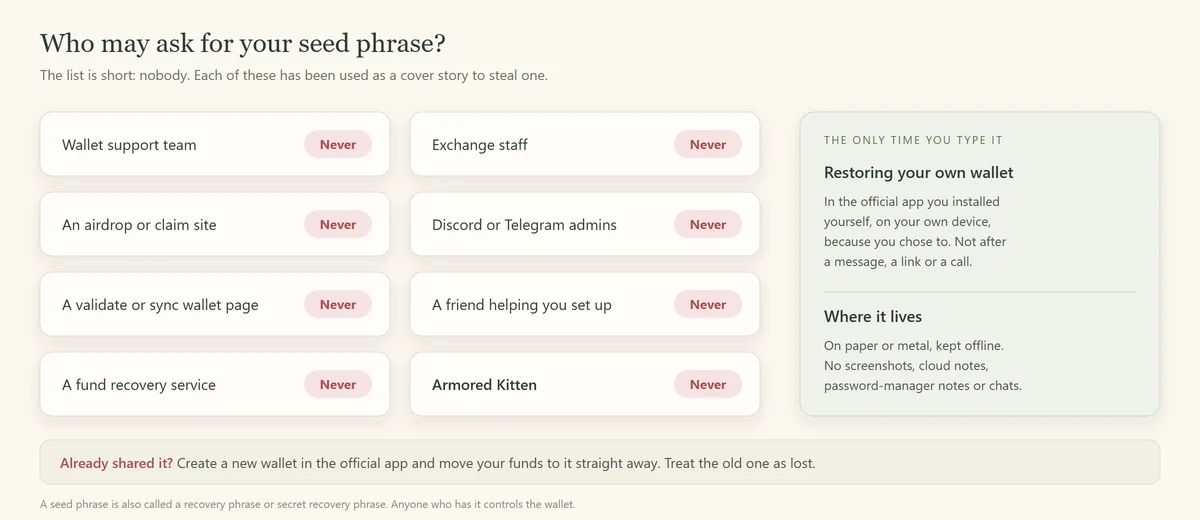
An unsolicited helper may offer to fix a stuck transaction through a form, remote-access tool or wallet request. Initiate support through the app or official help centre you already trust instead.
Phantom's support guidance explains what its team can and cannot do and says it will not ask for recovery words or private keys. That is more useful than a blanket claim that no legitimate company ever messages a customer: independently verify the specific channel and request.
Impersonators of people you trust
A copied profile or compromised account can have a familiar picture and earlier chat history. For an unexpected money request, contact the person through another established channel. Do not let a voice, image or account badge substitute for that check.
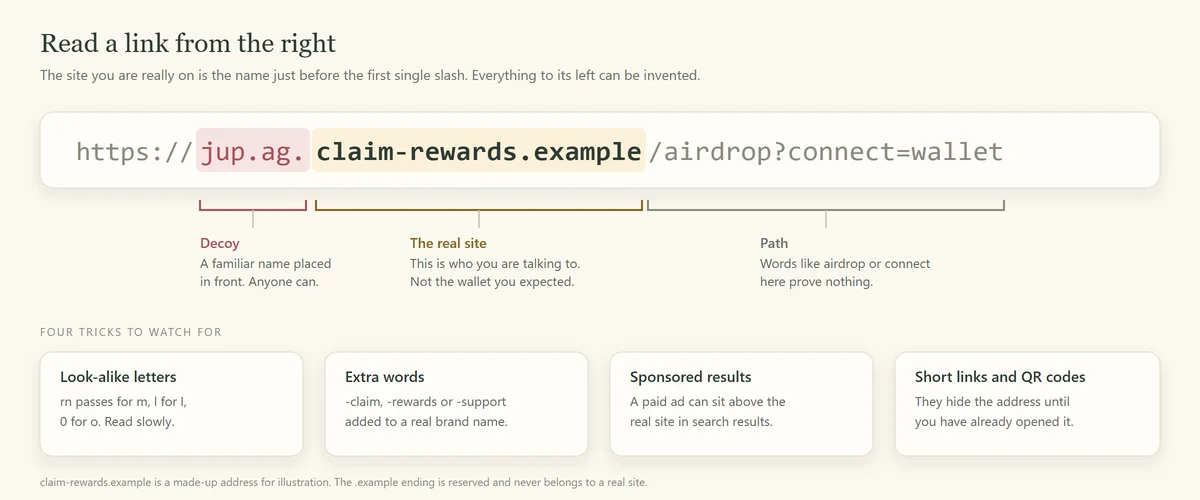
For a claimed business or public authority, find its official contact route yourself. A warning about your account does not require you to act through the warning's own link.
Romance and long-con investment scams
A new contact can steer a relationship toward a platform that displays attractive balances. Screenshots, a professional-looking dashboard and even an initial withdrawal do not prove that later withdrawals will be allowed.
Requests for more deposits to release supposed earnings deserve independent investigation. The FTC's cryptocurrency-scam guidance describes investment approaches that use social contact and promised returns. Do not send more money to test whether a displayed profit is real.
Giveaway and doubling scams
Treat a request to send crypto to a promoter in return for a larger promised payment as a serious warning. A celebrity image or a hijacked account can make that request look public and credible.
Distinguish this from a disclosed network transaction cost for an operation you independently verified. The presence of a fee alone does not establish whether a service is genuine; the promised reward and actual wallet request both need scrutiny.
Job and task scams
An unexpected task platform may show earnings for ratings, clicks or product promotion, then demand your own deposit to continue or withdraw. The FTC's task-scam warning describes that escalation. A small initial payout is not proof that a larger deposit is safe.
Check the employer and role outside the conversation. Do not send a deposit to unlock supposed wages on the recruiter's platform.
Recovery scams
After a loss, an unsolicited contact may promise to retrieve funds, invoke a real organisation's name or demand an advance payment. The FBI's recovery-firm alert warns about those tactics and states that law enforcement does not charge victims an investigation fee.
A paid technical or legal service is not automatically proof of fraud, but neither is it a promise of recovery. Verify credentials, jurisdiction, scope and terms independently. An unknown person promising guaranteed recovery should not receive your secrets, wallet access or an advance payment.
The common thread
Watch for a request to surrender control: transfer funds, reveal credentials, install remote access, approve an unexplained wallet action or keep the arrangement secret. A deadline is a reason to slow the decision, not skip verification.
What to do when a conversation feels off
Pause contact and authorisations. Keep relevant public transaction references, website addresses and messages for an official report, with secrets removed from anything you share. Contact the affected wallet, exchange or service through its known support route.
Use your local police or national fraud-reporting authority for the relevant country. The FBI's Internet Crime Complaint Center is a US reporting route; it is not a substitute for local assistance worldwide. Reporting does not guarantee recovery.
How to protect a friend who is new to crypto
Agree on a second-channel check for unusual requests. Be someone they can tell about a mistake without shame. A useful message is: "If an account using my name asks for money or codes unexpectedly, call me using the number you already have."
How to recognise a real Armored Kitten greeting
Verify an unexpected greeting with the sender independently. A displayed name or convincing design is not proof. Reading an ordinary card does not need recovery words; optional token claims are separate operations to inspect through gift safety.
For the link itself, read phishing checks. For exposed recovery material, use the seed-phrase guide. The beginner field guide connects these different situations.
Armored Kitten is an independent greeting studio and is not affiliated with or endorsed by Jupiter. Token gifts are optional, can change in value, and are not investment advice. Check the rules that apply where you live.